
What you can climb
Ice shelves, scree and gentle snow all take a penguin on foot. What stops you is steep blue ice combined with a short stamina ring: pick a longer diagonal instead of going straight up, and climb while the ring is full.
Every slope in Penguin Colony looks climbable until you are halfway up it. This page is the terrain vocabulary you need to read a face before you commit to it, using what the demo exposes and what players have tested.
The terrain you will meet
| Terrain | Climbable | Stamina behaviour |
|---|---|---|
| Flat shelf ice | Yes, always | None |
| Gentle drift snow | Yes | Barely drains |
| Scree and rubble | Yes, slowly | Drains slowly, easy to slide back |
| Steep blue ice | Yes, with cost | Drains hard while climbing |
| Vertical ice shafts | Yes, as a route | Drains continuously, expect a full ring |
| Water | Swim, not climb | None |
The distinction that matters is not "can I climb this" but "can I finish this". Almost every surface in the demo takes a penguin eventually; the ring decides whether you get there in one push.
Reading a face before you start
Stand back and look for two things: whether there is a diagonal line across the face, and whether there is a shelf partway up you could stand on. A diagonal route across a steep face is cheaper than a straight climb, and a mid-face shelf turns one expensive climb into two cheap ones.
Slopes players get stuck on
The terrain that catches people out is the long approach to the expedition sites, where snow and ice interleave and the gradient arrives gradually. You do not notice you are climbing until the ring is half gone.
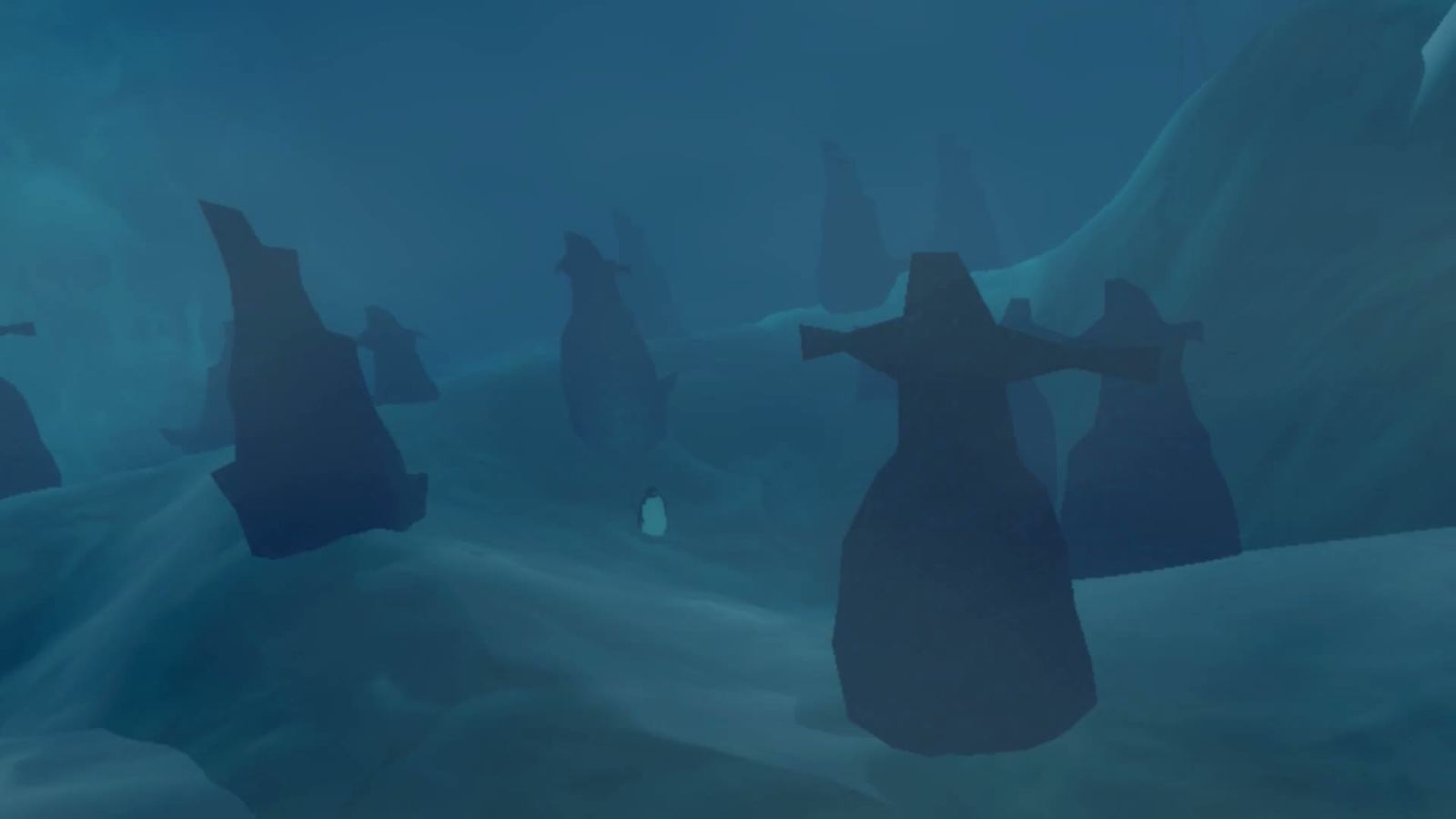
The other problem area is interior ice, where shafts and ladders are steep and the light gives you almost nothing to judge distance. Take those routes in short pushes and keep a mental note of the last spot you could stand still.
Water as a road
Swimming does not touch the ring, which makes open water one of the safest ways to move. It is also the slowest, and it puts you at eye level with a surface that reflects everything, including things you would rather see coming. Use it when the ice route is expensive, not by default.
A practical rule set
- Prefer the diagonal over the vertical
- Never begin a serious climb below half a ring
- Treat a shelf as a checkpoint, not a destination
- If the fog is thick, take the low route
- Turn back early rather than halfway up
Once you can read terrain, the rest of the movement system follows: the ring is the budget, and stamina and movement explains how to spend it. If you are still learning the map, navigation and orbs is the page that stops you walking in circles.