
Where the horror comes from
Three pillars: Lovecraft's At the Mountains of Madness and The Shadow Out of Time for the mythos, John Carpenter's The Thing for the paranoia, and Keiichiro Toyama's Siren for the desolate arctic environments and a curse that grows stranger the longer you look at it.
The studio has been unusually open about where Penguin Colony's horror comes from, and the three sources it names are specific enough that knowing them changes what you notice in the demo.
Lovecraft, first
The game is a re-imagining of At the Mountains of Madness and draws on The Shadow Out of Time as well. It is set two years after Lovecraft's death, which places it in 1939 and lets it continue his weird-fiction tradition rather than adapt a single text.
That means the Antarctic is not just a setting. It is the site of an expedition that has already failed before anyone you see has understood what it is: the mountains hide something older than the human presence, and the humans are the ones who destabilise it.
John Carpenter's The Thing
The second pillar is the 1982 film, and the homage is not subtle. The game's title screen is a direct nod, and the studio points out it was made practically, down to a burning bin bag in the shot. Players noticed on their own: one thread credits the title screen, and another picks up the music and a burning pile as further nods.
Siren, which is the one that gets missed
The third pillar is the one the studio's own staff write about. In an August 2026 post, director Naphtali Faulkner traced a specific part of the horror to Siren (released as Forbidden Siren in Europe and Australia), the PlayStation 2 game made by Keiichiro Toyama and Japan Studio.
| Reference | What it contributes to Penguin Colony |
|---|---|
| Lovecraft's At the Mountains of Madness | The Antarctic expedition, the ancient thing under the ice |
| The Shadow Out of Time | The mythos the game expands from |
| The Thing (1982) | Title screen homage, paranoia, the score |
| Siren / Forbidden Siren | Sparse arctic environments, minimalist HUD, an escalating curse |
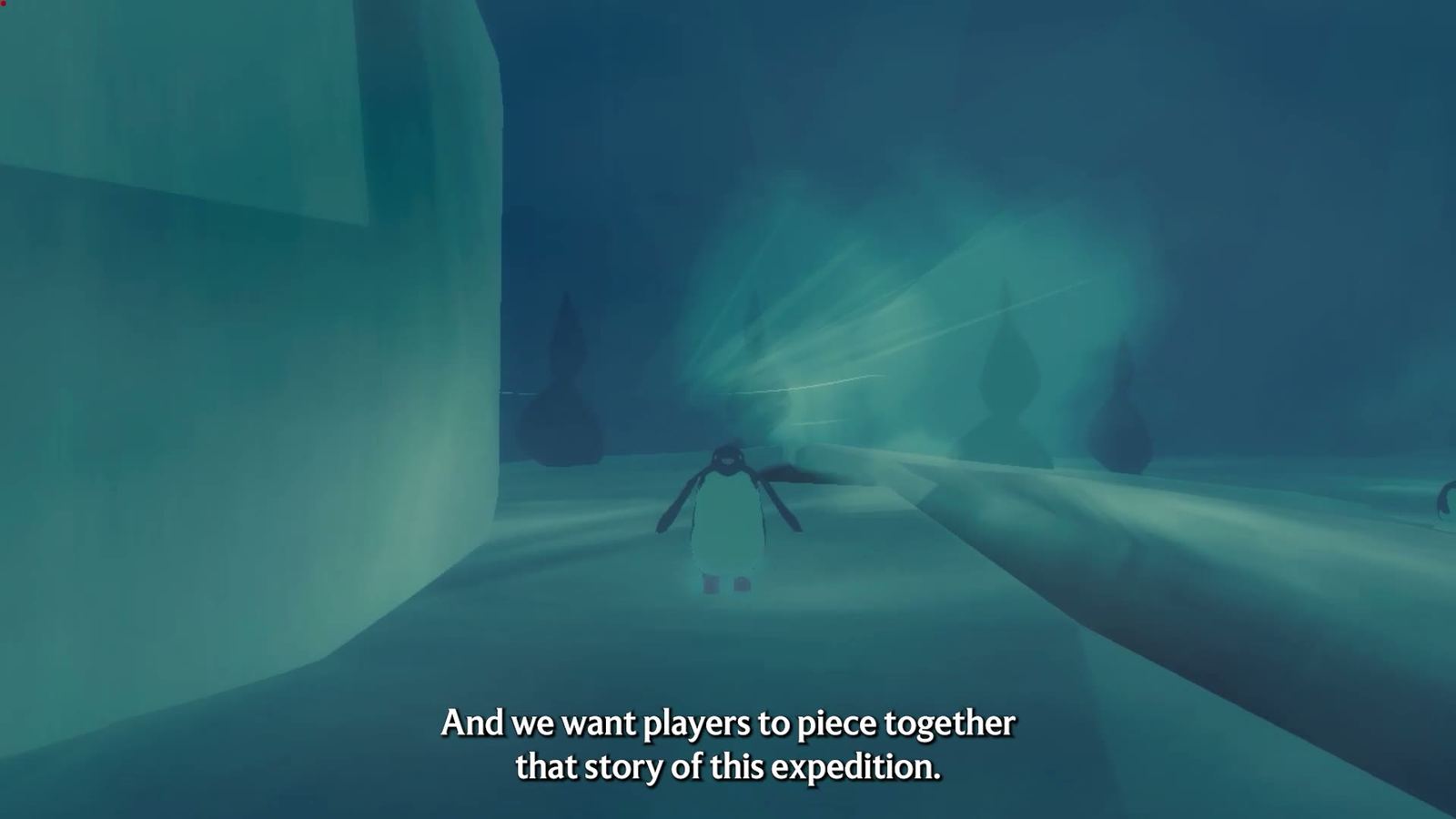
The two things Faulkner points at are worth repeating in his own framing. First, the environments: "sprawling, desolate arctic environments" and a setting where the rivers high in the mountains turn to blood and fog rolls in as the curse returns. Second, the escalation. In Siren, the shibito start as mindless zombies and become more bug-like as the game proceeds, all the way to the origin of the curse: a beautiful, god-like being that glows blue. He says directly that he hopes players see the parallel in Penguin Colony.
That is as good a description of what you are watching in the demo as anything the store page offers.
Reading the game with those in hand
- The minimalist HUD is a Siren decision, not an oversight
- The blue glow in the dark is a specific borrowed idea, not decoration
- The humans are the horror; the world is old and indifferent
- Nothing you do shortens the sequence, because the curse is not yours
For the factions those humans belong to, read story and factions; for how the horror is delivered, see narration and audio.